Most businesses understand that missed calls can cost money.
A potential customer rings, nobody answers, and they try somebody else.
Simple.
But there is another side to business phone calls that gets talked about much less.
The calls you do answer can cost you too.
Not necessarily because the conversation itself takes a long time.
The bigger cost is often what happens to your attention.
It starts with one ring
Imagine you are halfway through something that actually requires concentration.
You are preparing a proposal.
Working through a complicated set of accounts.
Writing something important.
Speaking with a customer.
Diagnosing a problem.
Planning tomorrow’s work.
Then the phone rings.
You stop.
You look at the screen.
You answer.
“Hello?”
And the caller says:
“Hi, I’m calling about your business energy contract…”
Spam.
The conversation lasts twenty seconds.
Technically, you’ve only lost twenty seconds.
But that isn’t really what happened.
You were focused on something.
Then your attention moved to the phone.
Now you have to get back into whatever you were doing before.
And sometimes that is much harder than simply carrying on from the exact point where you stopped.
Then you’re already holding the phone
This is where it gets even worse.
You finish the call.
You’re already looking at your phone.
There is a WhatsApp notification.
You check it.
Then you notice an email.
You reply quickly.
Someone has sent you something on Teams.
While you’re there, you check your calendar.
Maybe you glance at another notification.
Five minutes later, you put the phone down.
What started as a twenty-second spam call has suddenly taken several minutes out of your day.
More importantly, you’ve completely left the task you were working on.
Now you need to mentally get back into it.
What was I doing?
Where was I?
What was the next thing I needed to work out?
That is the hidden cost of interruptions.
Not every call deserves your immediate attention
Businesses often treat the ringing phone as if it automatically has the highest priority.
Phone rings.
Everything stops.
But think about the calls most businesses actually receive.
Some are new enquiries.
Some are existing customers.
Some are suppliers.
Some are people asking basic questions.
Some are appointment changes.
Some are sales calls.
Some are spam.
Some are completely irrelevant.
And yet, until you answer the phone, you often don’t know which one it is.
So every call gets the same privilege.
It gets to interrupt whatever you are doing.
That doesn’t make much sense.
Spam calls are particularly expensive
A genuine customer enquiry at least has a reason to interrupt you.
Spam doesn’t.
It creates disruption without giving the business anything in return.
A caller trying to sell you electricity.
Someone asking about your broadband contract.
A recorded message.
A marketing company.
Someone pretending they need to speak to the owner.
You still have to look at the phone.
You still have to decide whether to answer.
And if you do answer, you still have to stop what you were doing.
For a business owner receiving several of these calls throughout the week, that interruption starts to add up.
Not just in minutes.
In lost concentration.
The important calls can be disruptive too
This isn’t only about spam.
Even genuine calls can arrive at completely the wrong moment.
A customer might simply want to know what time you close.
Someone wants to check whether you cover their area.
An existing customer wants to move an appointment.
Another person wants to leave a message for somebody.
All legitimate calls.
But do they really need to interrupt the person who is currently working on something more important?
Probably not.
The customer needs an answer.
That doesn’t necessarily mean they need you to answer it.
There is a difference between being busy and being productive
It is very easy to spend an entire day reacting.
Answer a call.
Reply to an email.
Check a message.
Deal with another call.
Send something.
Answer another question.
Then suddenly it is 4:30pm.
You have been busy all day.
But the one thing you actually wanted to get finished?
Still sitting there.
For many business owners, the phone is part of that problem.
Every ring creates another decision.
Do I answer?
Is it important?
Can it wait?
Who is it?
And once you have been interrupted enough times, doing work that requires proper concentration becomes increasingly difficult.
Your phone shouldn’t control your working day
Of course, ignoring customers isn’t the answer.
You still want enquiries answered.
You still want people looked after.
You still want important calls to reach the right person.
The goal isn’t to stop answering the phone.
The goal is to stop every single phone call from demanding your attention.
That is where an AI receptionist becomes useful.
Let the receptionist deal with the interruption
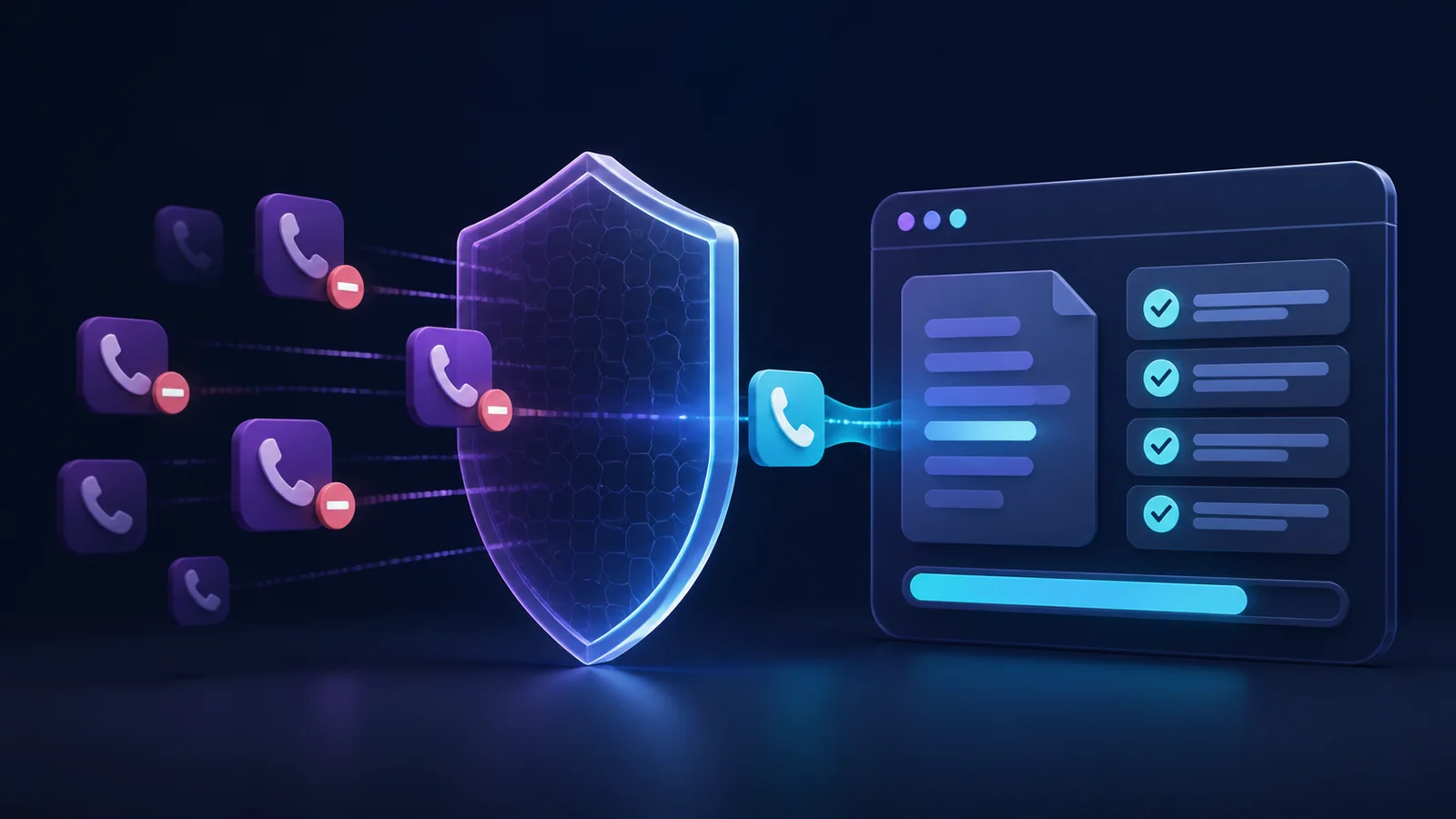
Instead of every call going directly to you, Sally can answer first.
A genuine customer can explain what they need.
Basic questions can be answered.
Details can be collected.
Appointment requests can be captured for your team.
Messages can be taken.
Spam and irrelevant calls can be filtered out.
And if somebody genuinely needs to speak to you, the call can be transferred or the information can be passed on.
The caller still gets answered.
But you don’t have to stop what you’re doing every time the phone rings.
The valuable part is not just the time you save
It would be easy to calculate the value of an AI receptionist simply by adding up the minutes spent answering calls.
But that misses the bigger picture.
Ten phone calls lasting two minutes each don’t necessarily cost you twenty minutes.
They create ten separate interruptions.
Ten moments where your attention shifts.
Ten opportunities to pick up your phone and get distracted by something else.
Ten times you have to return to whatever you were doing before.
That can matter far more than the length of the calls themselves.
Some work needs uninterrupted time
There are jobs you can stop and restart easily.
There are others where you need to properly get into them.
Planning.
Writing.
Problem solving.
Working with numbers.
Reviewing complicated information.
Making decisions.
Even having a meaningful conversation with somebody in front of you.
Those things benefit from focus.
Constant phone interruptions work against that.
And for business owners, uninterrupted time can be surprisingly difficult to protect.
Being available doesn’t mean being interruptible
Customers should be able to reach your business.
That doesn’t mean you personally need to be available to every caller at every moment of the day.
There is an important difference.
Your business can be available while you continue working.
A receptionist can deal with the first conversation, understand what the caller needs and only involve you when necessary.
That is how a traditional receptionist has always protected people’s time.
Voice AI simply makes that possible for businesses that may never have been able to justify employing somebody purely to answer the phone.
The best call might be the one you never have to answer
If a genuine customer calls, gets the information they need, leaves the right details and feels looked after, that call has been handled successfully.
You don’t necessarily need to have been part of it.
And if a spam caller gets filtered without taking you away from something important, even better.
At SmartVoiceHub, we talk a lot about making sure businesses don’t miss valuable calls.
But there is another part of the equation.
Making sure the phone doesn’t constantly interrupt the valuable work you’re already doing.
Because sometimes the biggest benefit of having someone else answer the phone isn’t the minutes you save.
It’s getting your attention back.