
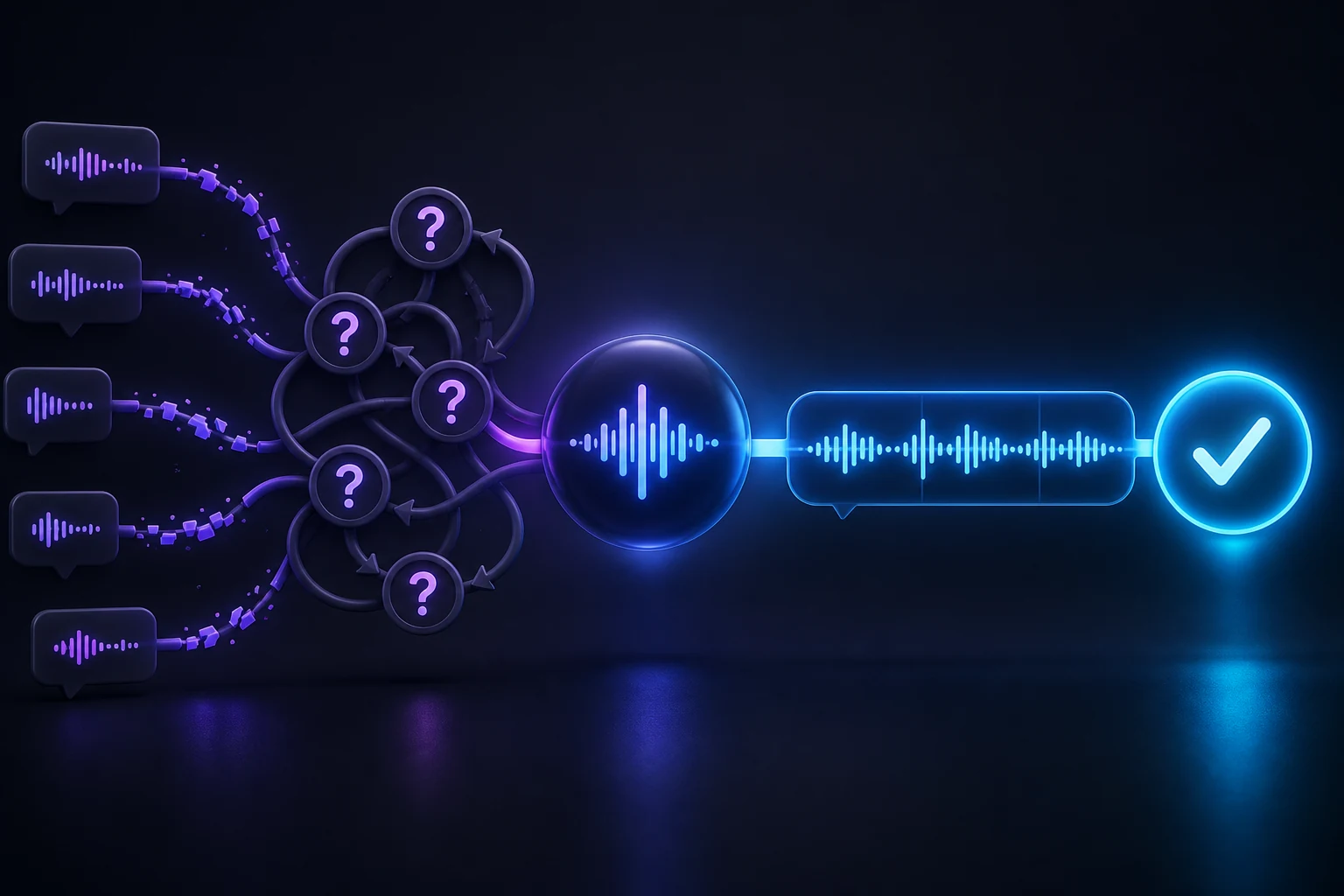
Some people approach AI receptionists already feeling annoyed — or become frustrated as the conversation unfolds. In most cases, this frustration isn’t caused by the AI itself, but by habits formed over years of interacting with old, rule-based phone bots.
Those legacy systems trained callers to speak in short, minimal phrases — one to three words at a time — because anything more would confuse or break the menu. Unfortunately, when people use the same approach with modern AI, it produces the opposite result.
Modern AI receptionists are designed to understand natural language, not to guess intent from fragments or single words. When a caller provides very limited information, the AI has no choice but to ask clarifying questions to properly understand the issue. This can feel repetitive to the caller, even though the system is doing exactly what it should: avoiding assumptions and preventing errors.
The irony is that the interaction becomes longer and more robotic precisely because the caller is not speaking naturally.
When callers explain their issue the way they would to a human — clearly, in full sentences, with a bit of context — the AI responds more smoothly, asks fewer follow-up questions, and resolves the call faster. The conversation becomes shorter, more natural, and far less frustrating.
Before blaming AI receptionists for a poor experience, it’s worth reflecting on how we communicate with them. These systems aren’t old phone menus — they’re conversational tools. Treat them like a person, and the experience improves immediately.
In short: better input leads to better outcomes.